
Three years. That’s how long I’ve been a beekeeper. Three seasons of joy, panic, learning, and finally, a taste of sweet success. Yet, despite bottling nearly 200 jars of honey this past summer, I decided at the begining of my third season it’s time to take the plunge and sit for the BBKA Basic Assessment.
Why? Because while a booming honey harvest feels like a victory, the last two years taught me that brute-force survival is not the same as skilled beekeeping.
 The School of Hard Knocks: My First Two Seasons
My beekeeping journey has been a rollercoaster, one that started with a harsh lesson in humility.
Season One: The Cluster and the Cold
My first winter was devastating. I lost all my colonies. They had plenty of stores—I checked—but they starved anyway. It was a crushing blow. I learned, too late, about the concept of the immovable cluster:
A colony can starve with full frames of honey inches away if the winter cluster cannot move across the cold combs to access it.
That failure wasn’t due to a lack of food in the hive; it was a lack of my own knowledge about bee wintering biology and cluster movement.
Season Two: Just Keeping Them Alive
The second year was an unending battle against the elements and my limited location. A combination of poor forage in my only available site and unseasonable weather meant I spent the entire season on the defensive. I was constantly feeding and generally just trying to keep the bees alive. There was no surplus honey, just sheer survival. I felt like a glorified bee-sitter, reacting to crises rather than managing a healthy colony.
Season Three: The Breakthrough
This year, everything clicked. I got a better understanding of colony strength, timely feeding, and swarm prevention. I managed to expand my hives to eight, and the flow was spectacular. Harvesting two hundred jars felt like the moment I could finally call myself a beekeeper.
 The Realisation: Success Isn’t Competence
This recent success is precisely why I’ve taken the Basic Assessment. I realised that my good season was, in part, down to luck and favourable weather, not just ingrained, robust practice. The first two years exposed critical gaps in my foundational knowledge.
The BBKA Basic Assessment requires you to have managed a colony for at least 12 months, and it verifies your basic skills and knowledge of the craft. It’s not a written exam; it’s a practical and oral assessment covering four key areas:
* Manipulation and Equipment (Practical handling and interpretation).
* Natural History and Beekeeping (Oral questioning).
* Swarming, Swarm Control and Effects (Oral questioning).
* Disease and Pests (Oral questioning).
Why I Need This Now:
* Formalising Foundational Knowledge: The practical assessment forces me to demonstrate proper technique. I need to know I’m not just muddling through, but correctly identifying healthy brood, diagnosing early problems, and handling the bees with the utmost care and respect.
* Targeting Weak Spots: My struggle with winter cluster starvation and the second year’s near-constant battle with low stores highlighted that my knowledge of bee biology and timing (areas 2 and 3 of the syllabus) is reactive, not proactive. Studying for the exam ensures I fill these critical gaps.
* The ‘Driving Test’ for Beekeepers: As many say, the Basic Assessment is the beekeeping equivalent of a driving test. It’s a recognised measure of competence. After three seasons of fumbling, fighting, and finally flourishing, I want that formal validation—not just for my ego, but for the welfare of my bees. I want to be able to say, “I am a competent beekeeper,” and have a qualification to back it up.
* The Next Step: Passing the Basic is the prerequisite for all other BBKA modules and assessments. It’s the launchpad if I ever want to delve deeper into bee health, breeding, or honey bee biology.
 Final Thoughts
My beekeeping journey has been a testament to the fact that enthusiasm isn’t enough. Losing all my bees, then spending a year scrambling to keep them alive, taught me more than any textbook. But now, with a successful year under my belt and a hive full of confidence, it’s the perfect time to step back, consolidate what I’ve learned, and prove that I possess the fundamental, consistent skill set to be a responsible and successful beekeeper.

Assessment Success
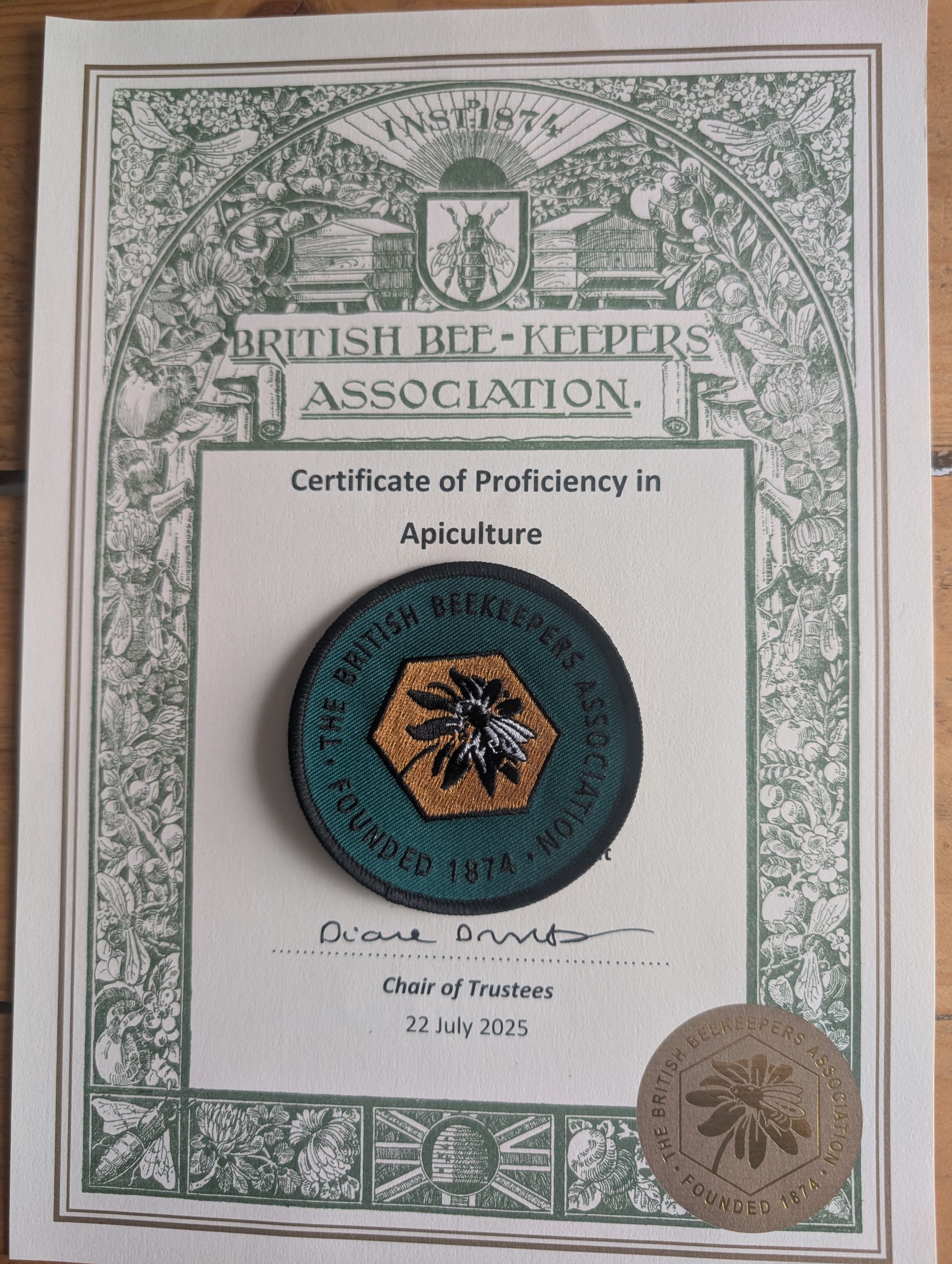
After completing the basic assessment in July, there was quite a long wait to find out the result. After a week or two, I finally received the email I had been waiting for: I passed the basic assessment with a Credit!
This goes to show that even after missing valuable practice exams, the necessary knowledge was there. It’s one thing to think you know what you are doing, and quite another to have proof that you know what you are doing.
Are you preparing for the BBKA Basic Assessment? What are you finding the hardest part of the syllabus to revise?
Leave a Reply