
-
September means fresh pencils, new school shoes, and excited children returning to theclassroom. It’s also an ideal moment to reconnect kids with nature — especially honeybees.Bees are tiny teachers: teamwork, communication, engineering, maths, environmentalresponsibility, and even emotional resilience. This post explores what children can learn frombees, why bees make excellent classroom topics, and some fun,…
-
When August arrives, North East beekeepers talk about one thing: heather. The purple moors ofNorthumberland and beyond produce one of Britain’s most distinctive honeys — ling heather.It’s strong, aromatic, and famously thixotropic (jelly‑like until stirred). Here’s what makesheather honey special, how it’s produced, and how to enjoy it. The Heather BloomLing heather (Calluna vulgaris) typically…
-
UK summers are getting hotter and drier at times, and bees feel it too. In July, colonies workhard to keep the hive cool, ripen nectar, and feed brood — all of which need water. With a littlegarden TLC, you can help bees handle hot spells safely and sustainably. Why Bees Need Water How to Make…
-
Honey is one of nature’s great origin stories. In June, many North East colonies are gatheringnectar at full tilt. How does thin, floral nectar become thick, aromatic honey? And why doeshoney from Newcastle, Northumberland, or County Durham taste different from elsewhere?Let’s walk through the journey — and the flavours unique to our region. From Nectar…
-
IntroductionBetween May and June, you’re more likely to see one of nature’s most dramatic sights: ahoneybee swarm. It looks alarming — thousands of bees in the air, then a football‑sized clusterhanging from a branch, fence post, or even a lamp post. The good news? Swarms are usuallygentle when clustered. This guide explains what’s happening, how…
-
April is the month when bees feel unmistakably present again. On sunny days, you’ll noticeforagers zig‑zagging through the garden, drones emerging, and fruit trees humming. Inside thehive, the brood nest is expanding, and the colony is preparing for peak spring flows. Here’swhat’s going on and how you can help.Inside the Hive: Growth Mode Fruit blossom…
-
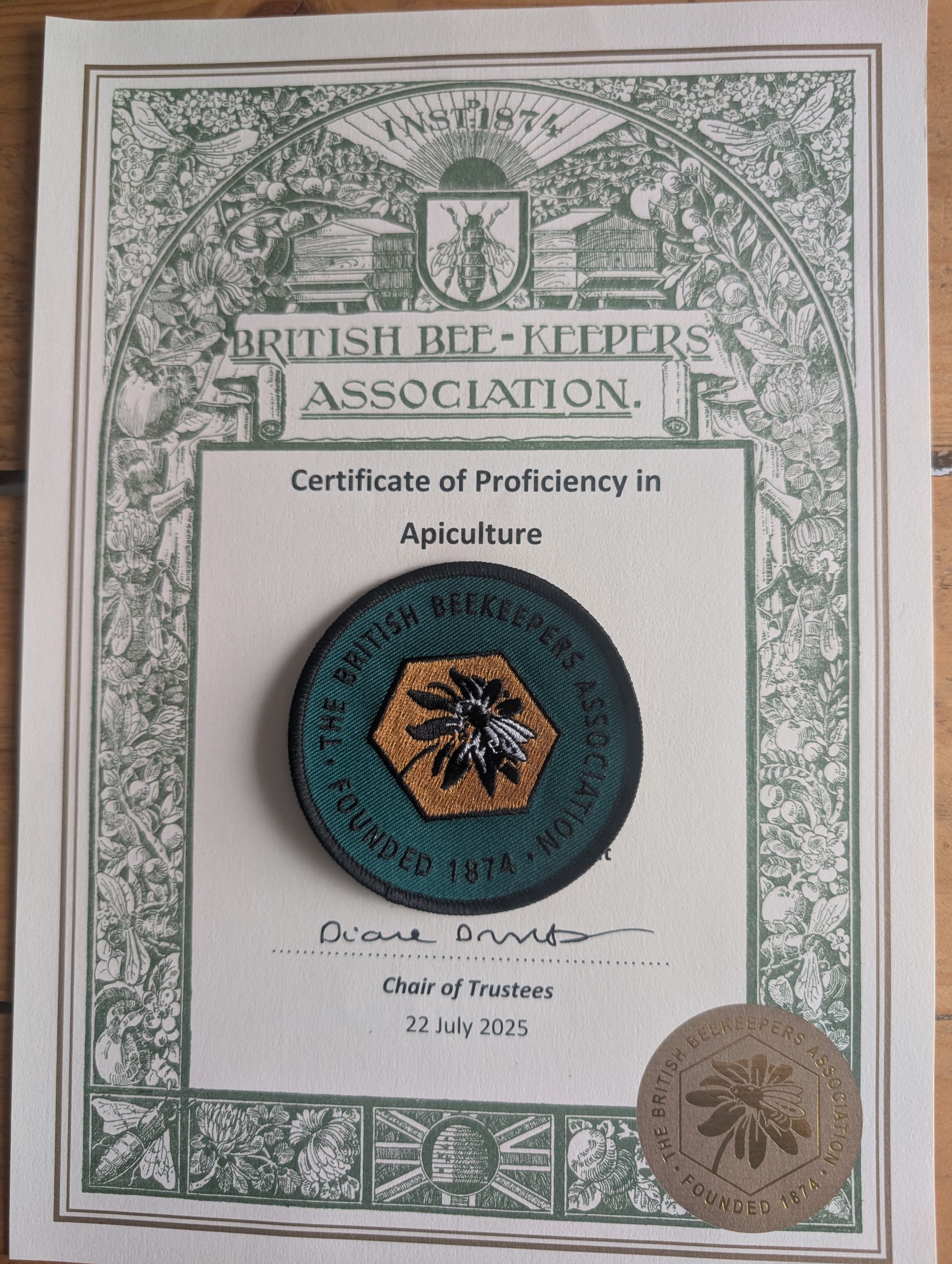
Three years. That’s how long I’ve been a beekeeper. Three seasons of joy, panic, learning, and finally, a taste of sweet success. Yet, despite bottling nearly 200 jars of honey this past summer, I decided at the begining of my third season it’s time to take the plunge and sit for the BBKA Basic Assessment.…
-
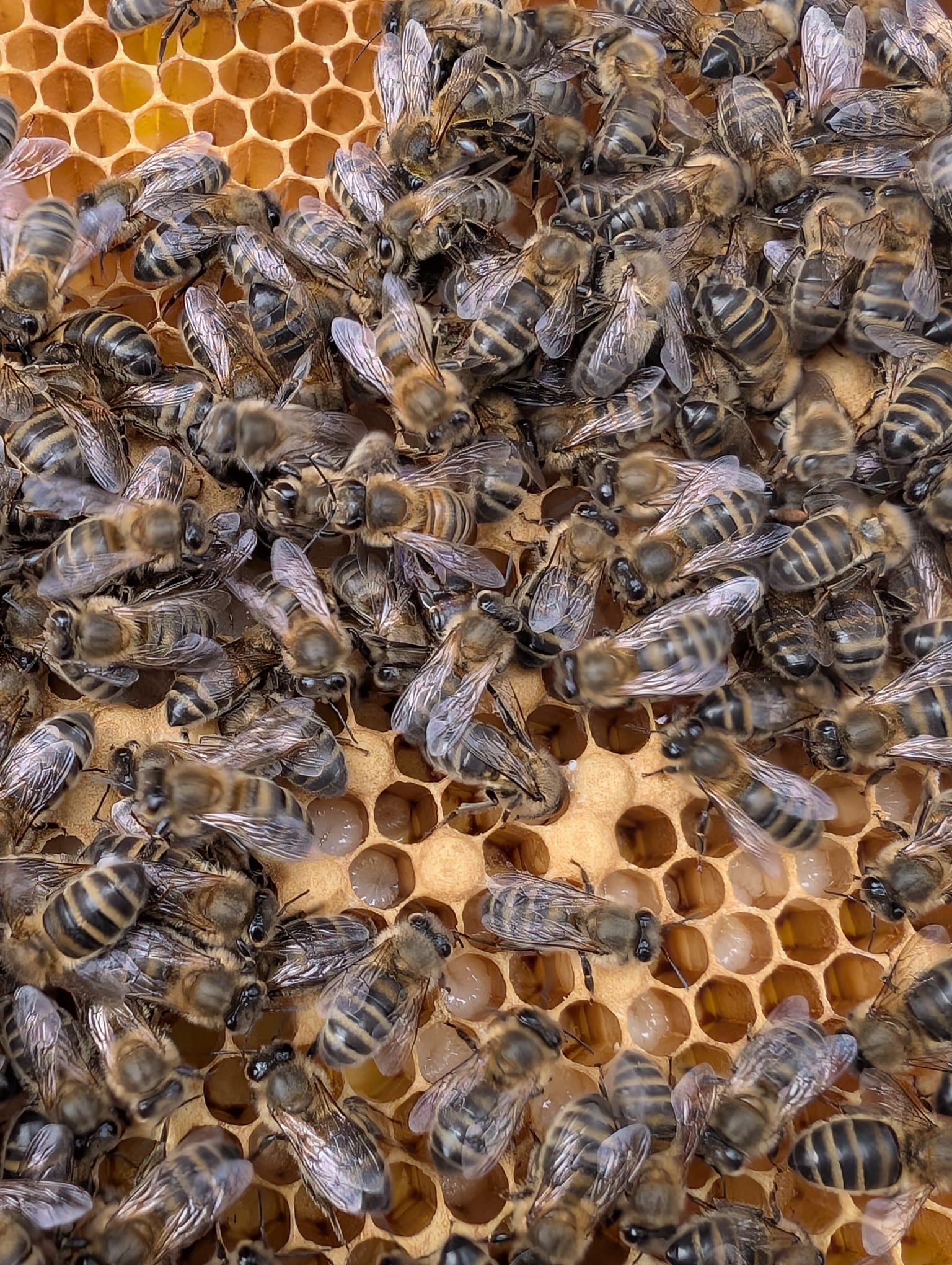
How Bee Colonies Transform from Summer Buzz to Winter Huddle Ever wondered what happens to that bustling hive of bees when the flowers fade and the temperature drops? The life of a bee colony undergoes one of the most dramatic transformations in the natural world. From a frenetic summer city to a tightly managed winter…
-
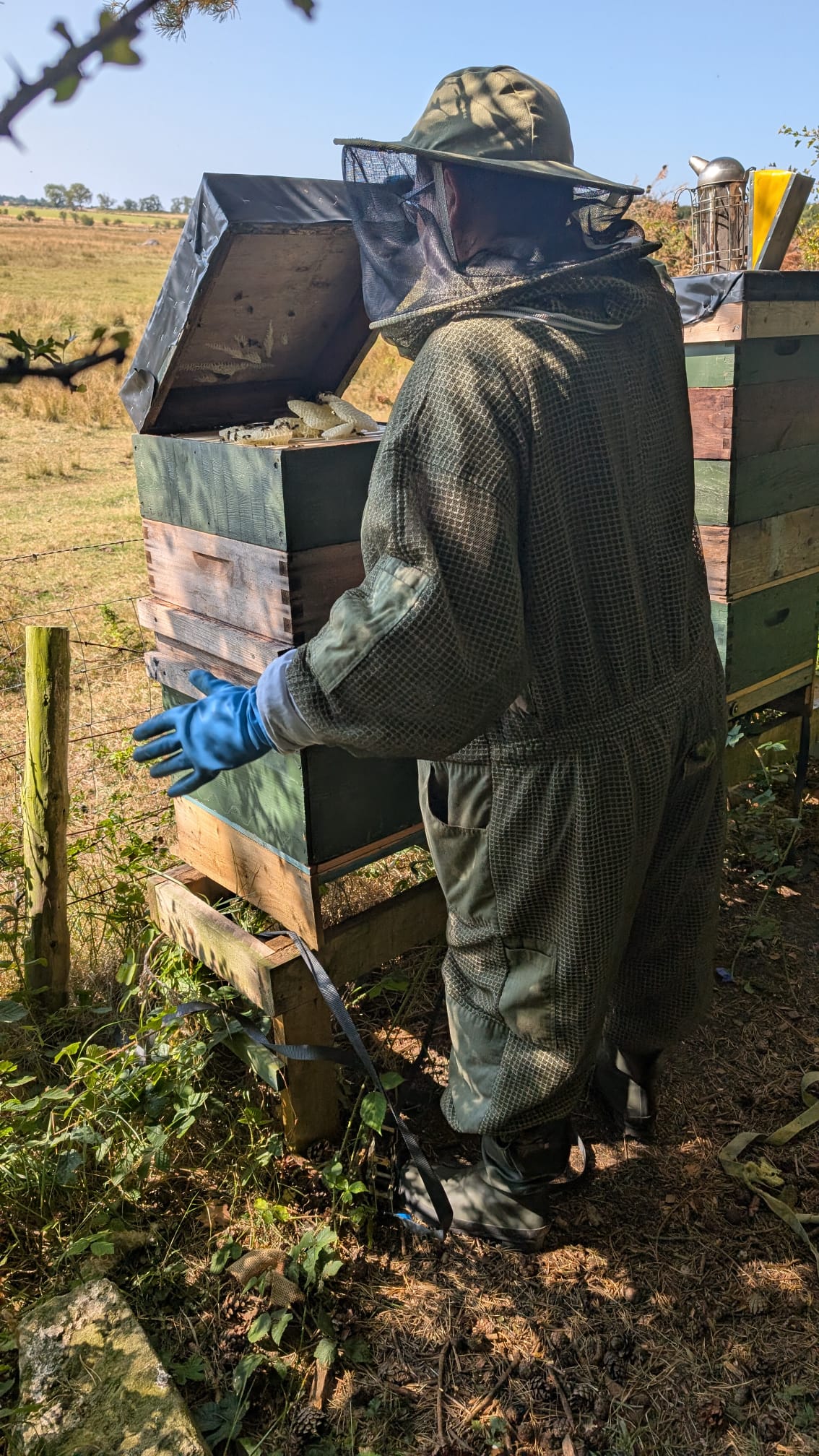
🐝 Ever wonder what the bees are up to this time of year here in England? As autumn fades and the chill sets in, honeybees across the UK are settling down for the winter months. With few flowers left to forage from, the colony’s focus shifts from gathering nectar to survival. Inside the hive, the…
-
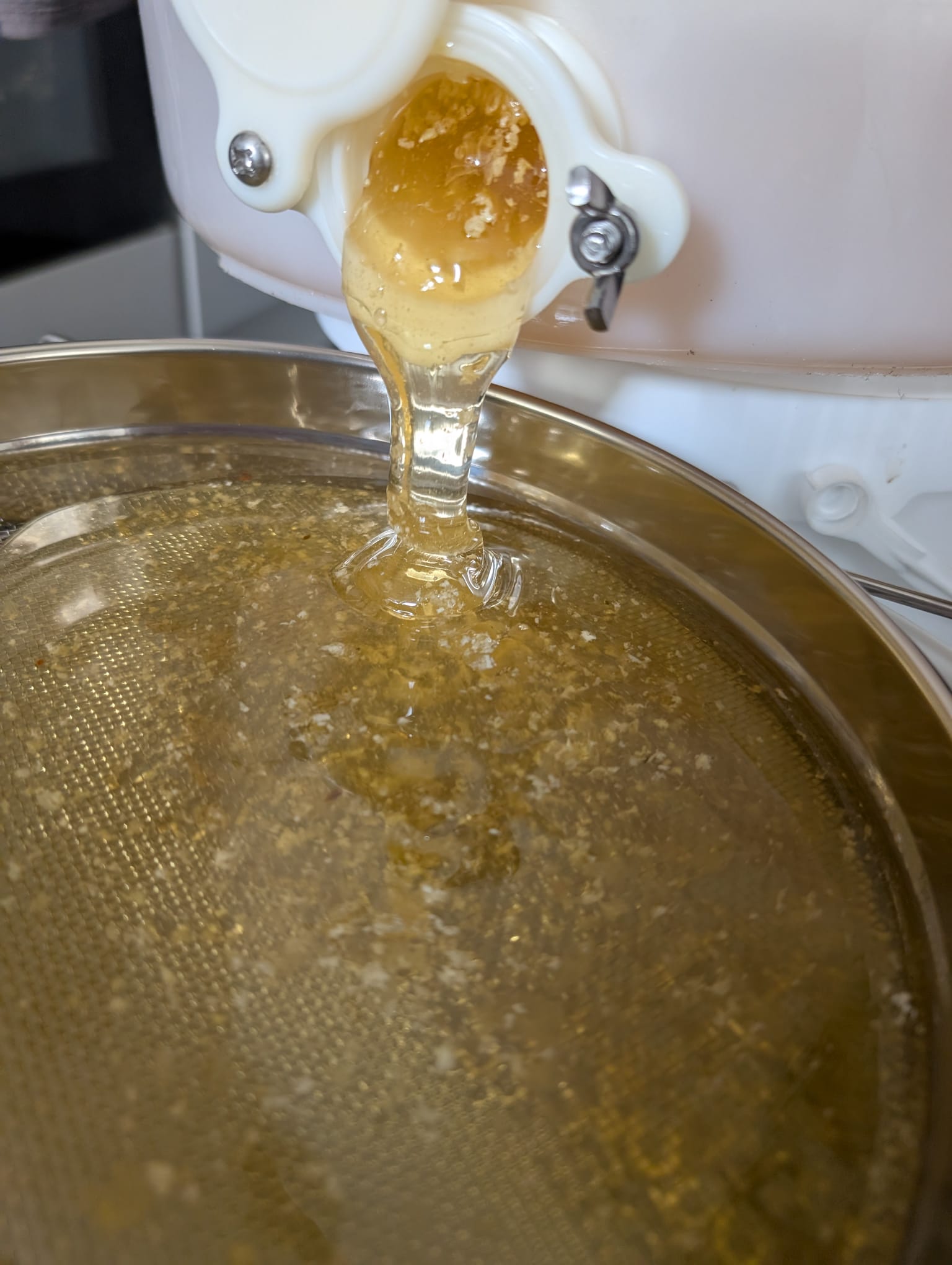
This honey had just been extracted from the hive, so it’s beautifully runny and golden. But over time, you might notice your honey starting to crystallise – and that’s completely normal. Crystallisation happens because honey is made up of natural sugars. The balance between glucose and fructose determines how quickly it sets. Honeys with more…